Dec 1 / Christian Bull

A New Shoot First Series - Design and Composition for film and VFX!

In the upcoming series, we'll dissect each of the five principles of design, accompanied by real-world examples.

Welcome to another edition of the Shoot First blog, where we delve into the intricate world of visual effects.

One of the amazing and terrifying things about VFX is that one way or another, you need to understand all the visual components of filmmaking, even if you never step foot on set, because you need to be able to reproduce them digitally.

Because of that, we’ll be starting a mini-series in understanding design, which is at the heart of creative storytelling, and therefore the heart of all things film and VFX!

In the upcoming series, we’ll dissect each of the five principles of design, accompanied by real-world examples.

It’s crucial to recognize that these principles are not rigid rules, nor are they meant to be broken. Instead, think of them as guiding concepts. Once you grasp these concepts, you gain the freedom to incorporate them into your work in a way that suits your vision and goals.

First Up: The Art of Balance
Our focus today is on the first principle: Balance. Luckily for us, balance in imagery follows the exact same physics as in real life.

The idea is the same if it’s a character, or a frame composition, but let’s look at them separately:

Shot Composition

The kitchen scales
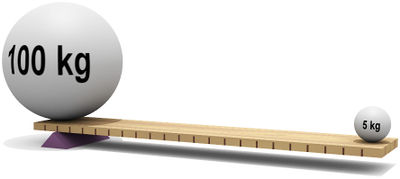
Envision your frame as a set of scales, with a central divide. If one side contains more dense imagery than the other, the frame becomes unbalanced, leaning in that direction. This applies not only to a vertical split but also to a horizontal one, maintaining equilibrium across the top-bottom axis.

Balancing the shot is as simple as balancing scales - although visual “mass” isn’t just size, it can also be color (more saturated colors carry more weight).

The invisible scales
There’s one more axis that we need to consider, and that runs from the camera to the vanishing point in the background. Balance here gives us depth.

The fulcrum
You can balance a shot by making it symmetrical, Wes Anderson style. But you can also balance it by having less weight further from the fulcrum, just like real life. This is very powerful when you’re balancing the depth. 
Examples:

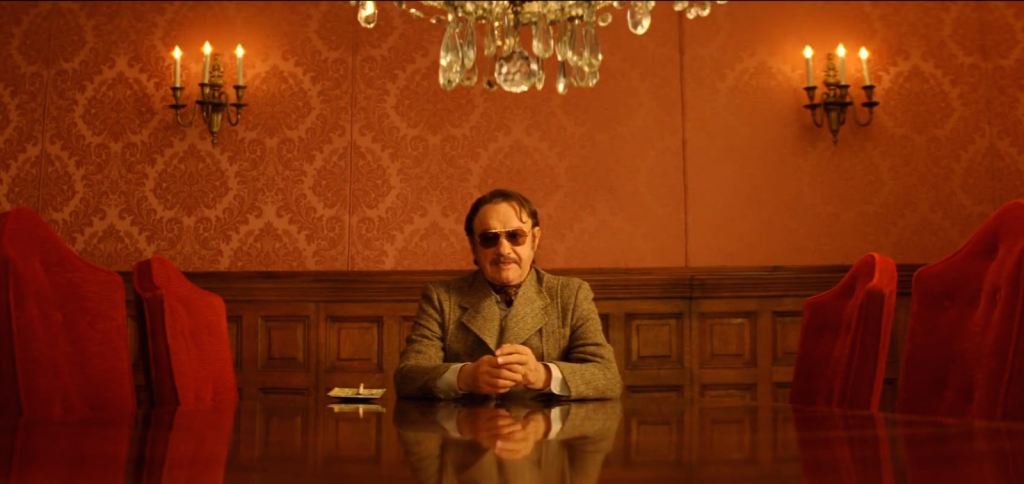
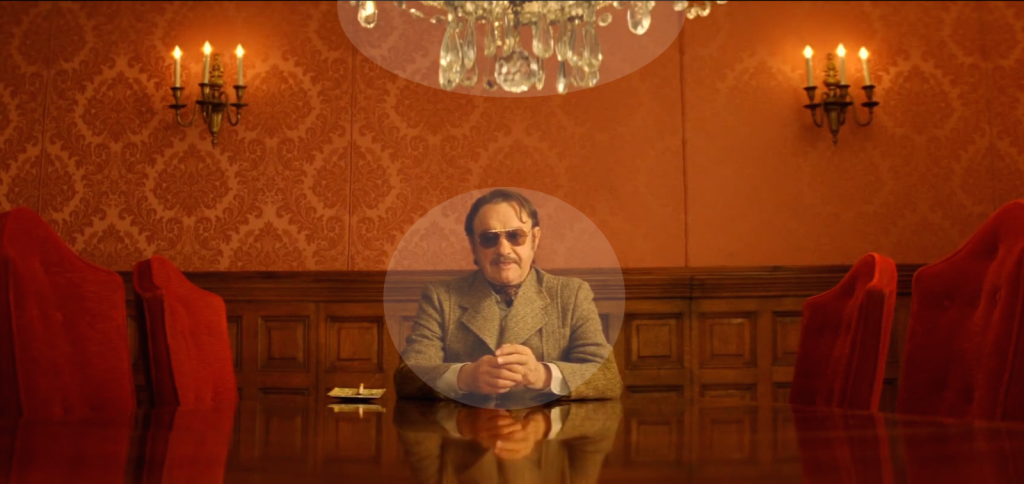
Classic Wes Anderson symmetry. Not good or bad - design is always context dependent. Composition is about knowing how to control the eye - and by extension the reaction - of the viewer. Notice how your eye is drawn to the break in symmetry (the ashtray).

A couple of things that aren’t obvious at first glance. The chairs, table, and dark wood panels pull the weight down - that is countered by the contrast (and upward direction) created by the candles on the walls. Even the depth is balanced - the figure takes the weight to the background, so the chandelier is in the foreground as counterbalance. It’s unlikely that these are all conscious choices by the DoP. They become instinctive when you’ve studied them for long enough.

In this image from John Woo’s “Hard Boiled”, there’s no symmetry - the frames are heavily weighted to the left by the foreground character, BUT there is balance. The balance is found through DEPTH. The protagonist fills ⅓ of the frame, his targets fill much less, so they need to be further away to achieve balance.

Character And Creature Design
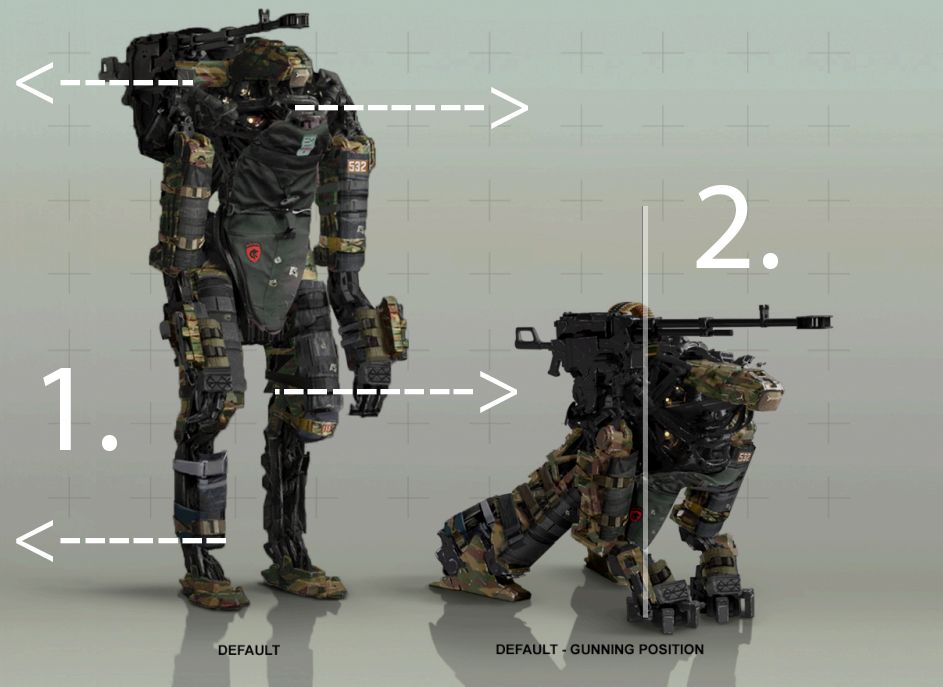
  1. In order for the robot to feel balanced, I needed to create a counter-balance to every large point of mass - so the robot’s large gun and backpack threw his weight back, so I counterbalanced it by pushing his chest and head forwards. His knees pushed forward, too, so I counter balanced this by having his shins kick back, like a quadruped. Finally his feet countered that by coming forward again. Searching for these counter points not only allows your designs to carry weight, but also ensures that they are visually engaging.
  2. Centre of Mass - where is the weight carried? That’s normally going to be straight down the middle, but it doesn’t have to be. The director wanted these characters to be able to compress into a stable gunning position. In order to find balance, I decided on a center of mass/gravity, and then made sure I had an equal amount of mass on either side of that center.

So…should you balance everything?

No…. It depends.

If you design a character or creature that is so imbalanced that it can’t stand up, it will be impossible for it to move convincingly. So that’s pretty important.

In animation, however, you’ll always be moving between poses in and out of balance (the process of walking can be thought of as “falling, catching yourself, falling, catching yourself…”). An animator once said to me “If you can spot where the center of mass is in a pose, that’s most of what you need”, because then you are always aware of - and therefore in control of - your character’s balance.

How about frame composition, I hear you ask, should that always be balanced? Hmmmm no. If you don’t have your frames balancing on any axis, the result will feel chaotic, and unsatisfying to look at. That can be pretty useful when you want the audience to feel uneasy!

So the conclusion is the same as we’ll come to each week of this series (spoiler alert…) - there are no rules, just concepts. Learn the basic principles of design, be mindful of them, experiment, and adapt them to your narrative goals.

Stay tuned for upcoming newsletters as we continue to unravel the secrets of design. Until then, keep creating and pushing the boundaries of what’s possible.

Happy creating!