
AI is pretty damn good at roto now!
Magic Mask on Steroids: New masking template dropping today
AI Apocalypse: Is rotoscoping dead?
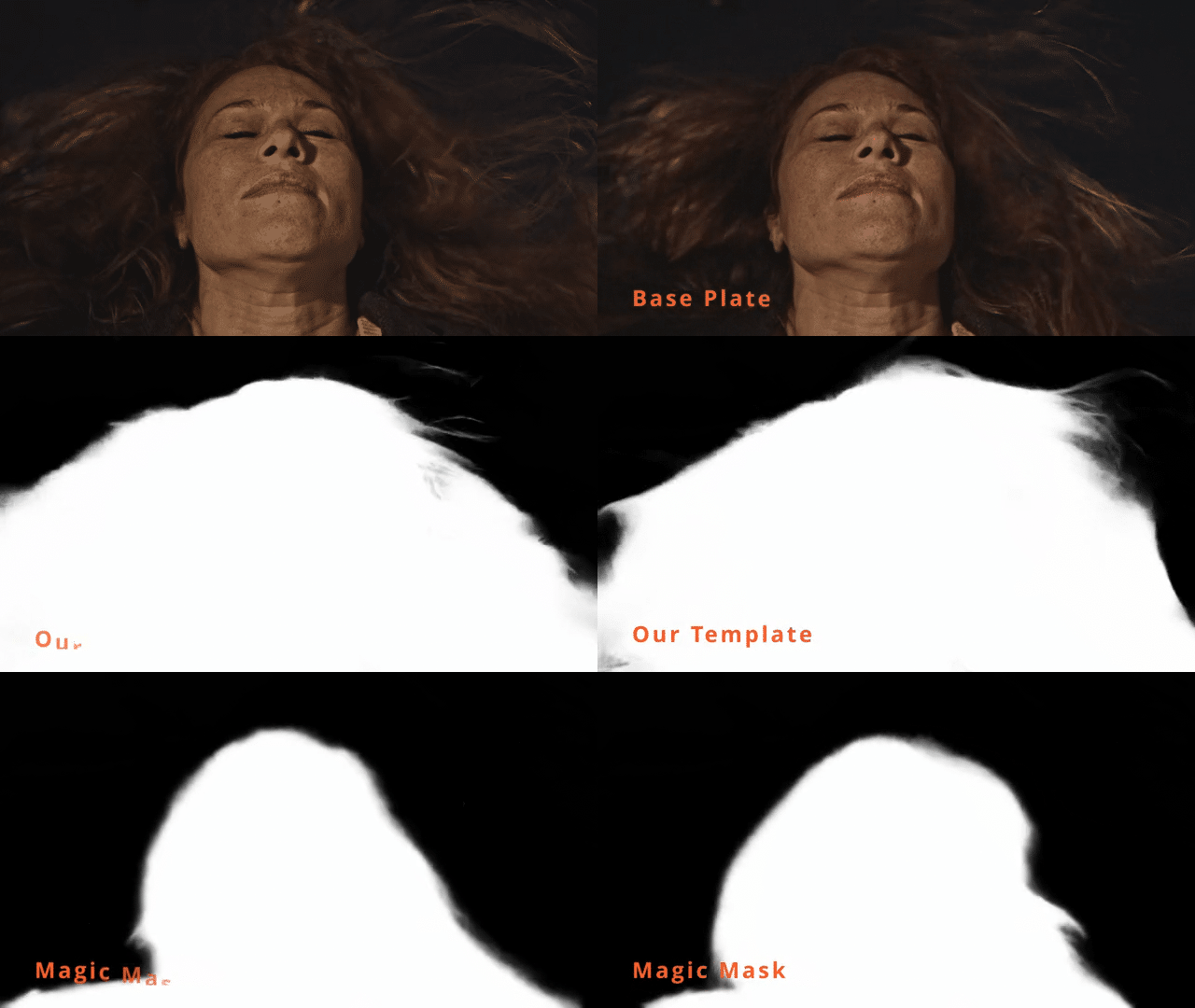
Our template: the perfect tool to get you out of hairy situations
Where AI is at right now
What it means for the industry
If rotoscoping is dead, it's mixed news. Roto and simple paint outs are two common entry points into professional compositing (the 3D artist equivalent is camera tracking). No roto means one less entry point, OR you just hire people to do less menial tasks.
Normally to land a job as a rotoscope artist, you need a kick ass showreel that demonstrates skill far beyond roto, which is… fairly insulting to everyone involved.
When I was a junior artist in film, I would happily do a menial, tedious task for 12 hours straight if I was learning while doing it. That meant that rotoscoping was fun for the first week, and then I'd learned everything I could about it. After that, I was just working to get through the day and pick up a paycheck.
What it means for independent creators
If you're creating your own work, losing days to complex rotoscoping is just not a price that you can pay. Outsourcing it to someone else may not be a price that you can pay either. We've done it quite a lot with our VFX company, and you can expect to pay $300-$1000 per shot depending on the length and complexity of the shot (and we outsource ours to Indian companies, the costs in higher income countries will naturally be higher).
Doing equivalent work at little to zero cost is a no brainer for a business point of view
So, is it actually dead?
AI roto works brilliantly when you need to isolate an object by its borders. But there are situations where doing it yourself is still the better call:
- Abstract masking - ie when you're masking a general area rather than an object's edge ("make this general area darker"), it's just going to be faster to do it yourself than to coax AI into the right shape.
- Motion or lens blurred objects are difficult for AI to solve. Even when it does a fairly good job, what it gives you is what you get. When you're creating the masks yourself from splines, you can control the blur and shape with pixel perfect precision.
- It’s AI. It gets stuff wrong.
So it's the usual answer: learn the skill inside and out, and use it whenever you need to. Use AI when you don't. The fact that this is so heavily debated continues to confuse me!
Roto in an AI workflow
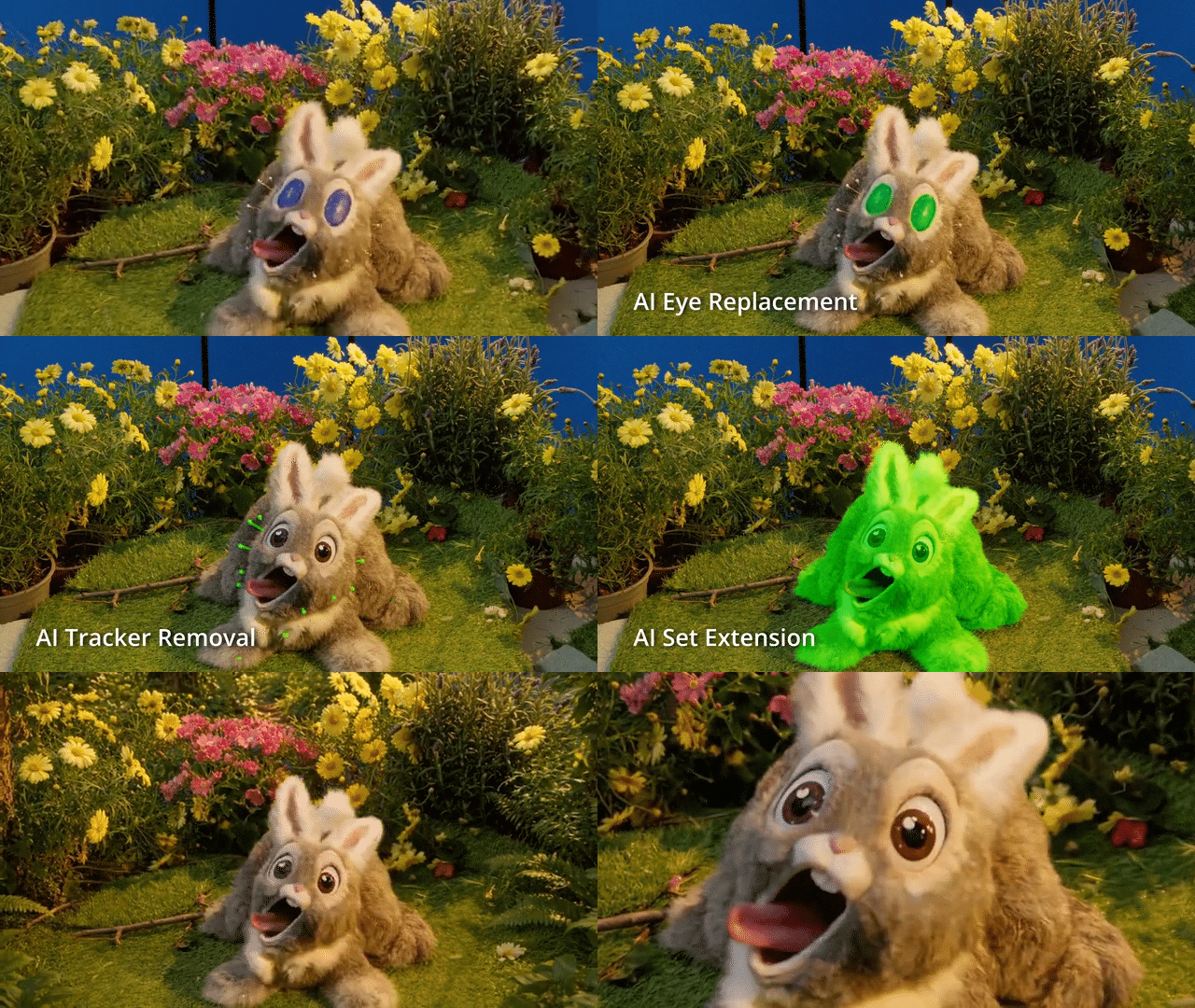
AI roto being used to layer in multiple AI generations
One thing that's becoming clear to me is that roto and masking is actually really useful in an AI workflow. Each time you enter latent space (i.e. each time you generate something), AI will apply some destructive pressure to your work.
As you start to build more complex workflows, you'll find that you're generating sections of your shot, masking out everything except what you need, and then layering it in. By the time you've finished, you might have layered up 5 or more different generations, and thank God that you don't have to manually roto them all!
Not currently a Shoot First student and want access to these videos along with all other filmmaking and vfx tutorials?
Success! You're all signed up to the follow along!
How do you want to make your film?
Close
Claim your 20% off