
Jul 2
/
Christian Bull
DO YOU NEED TO BE ABLE TO DRAW TO MAKE FILMS?
Well clearly not, thousands of films have been made by filmmakers who can’t draw.
BUT, I’m strongly in favour of it. It’s the fastest and cheapest way of getting thoughts from your brain and into a 2D visual space, which is what films are.
Empty space, drag to resize
IT'S A TOOL, NOT A TALENT
Drawing ability is one of those things that for whatever reason, people think you’re either born with or you’re not. Having taught it myself, I can promise you that’s not the case.
But even if it was true, I’d still say to you non-drawing filmmakers that you should be doing it, because storyboarding has very little to do with your ability to draw. A head can be a circle, a figure can be a stick man, that’s fine. It just needs to get you to the point of being able to know if your story works, or if you’re working with a crew, are you able to convey the story to them.
Empty space, drag to resize
SCORSESE VS. THE AI STORYBOARD
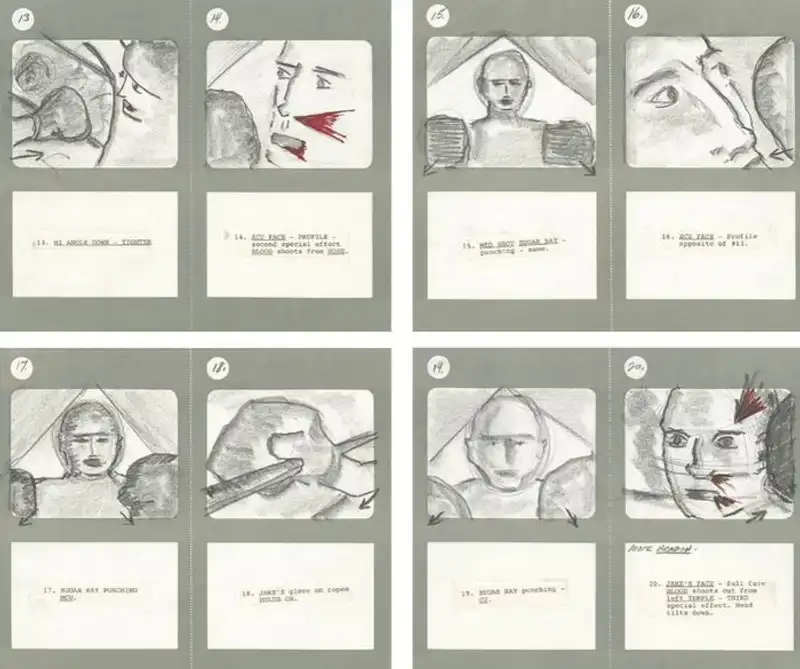
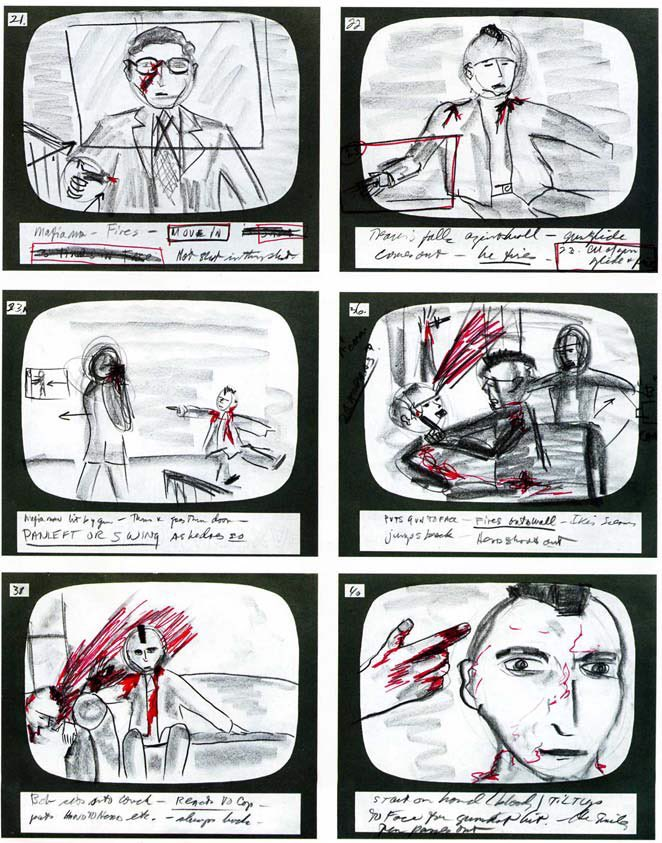
At this point in the discussion, I always bring up Scorsese’s storyboards for Taxi Driver as an example of how poorly drawn boards can still translate to cinematic brilliance.
So imagine my disappointment when I heard about him shilling for Black Forest Labs, an AI storyboarding tool. I’ve experimented with it, and it wasn’t an enjoyable experience. The idea is that you plug in your script, and you get your boards out the other end.
But when you’re mapping out any shot, the question you want to ask yourself is - who’s point of view is this? I don’t mean literally, like a PoV shot, but rather whose story am I telling here? What we see in the mirror is not the same as what other people see. Same person, different perspective.
AI doesn’t have that perspective, so it just gives you shots. Scorcese knows this, and if you dissect what he’s actually saying - take a look at Black Forest Labs own video with him here - it’s not that shocking. He’s just imagining a scene, looking at what’s generated, and going “Yeah that seems useful”. There isn’t one word of him saying that he would use it for storyboards, or a replacement for artists.
Here’s his quote:
Now, with this tool, I can share what I’m visualizing more clearly and efficiently to my creative team—the production designer, art designer, and cinematographer—for them to build on to enrich cinematic intelligence. I recently tested this out on a scene and the ability to visualize and immediately share the storyboard was creatively freeing.
If Polymarket lets me place a bet on whether he still uses hand drawn boards for his next film, I’m putting all my money there. Because regardless of your stance on AI, if you’re chasing down efficiency, how can you get more efficient than a few scribbles to map out your ideas?
Empty space, drag to resize
THE BOARDS THEMSELVES
So I’m giving the S-dog a pass on this, and to celebrate that, here are his boards for Taxi Driver and Raging Bull:
Empty space, drag to resize
RIDLEY SCOTT GOES THE OTHER WAY
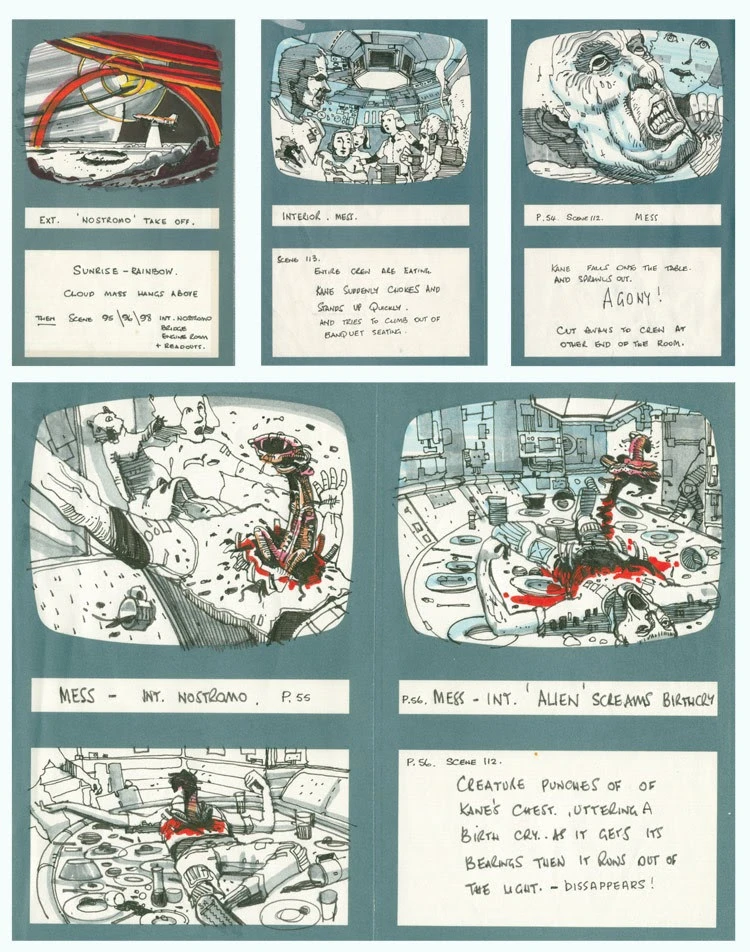
While we’re here, let’s go to the other extreme and take a look at Ridley Scott’s boards. Scott draws incredibly well, and that visual sense is in every frame of his films.
Empty space, drag to resize
DE PALMA: ZERO PENCIL MARKS
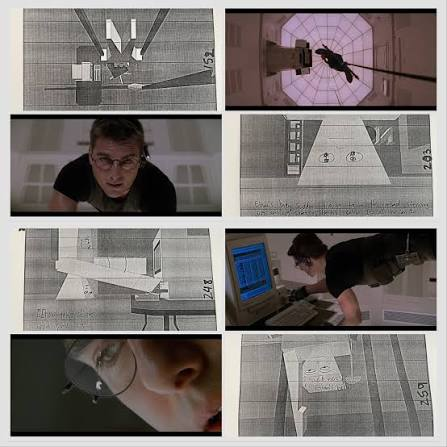
Aaaand let’s finish on Brian De Palmer’s boards for Mission Impossible, which he did in full 3D without a single pencil mark. Storyboards greatest weakness is complex movement, and that’s really easy with 3D. My recommendation would be to start with sketches because it’s so damn fast, and then use 3D where there’s complexity needed, or photos if you already know what the environment is.
Empty space, drag to resize
Empty space, drag to resize
Empty space, drag to resize
Not currently a Shoot First student and want access to our AI templates along with all other filmmaking and vfx tutorials? Click the button below to choose the plan that suits you best.
Empty space, drag to resize
Empty space, drag to resize
Write your awesome label here.
Write your awesome label here.
Write your awesome label here.
Write your awesome label here.
Success! You're all signed up to the follow along!
Keep an eye on your email for updates and reminders
Write your awesome label here.
Write your awesome label here.
Write your awesome label here.
How do you want to make your film?
Close
Claim your 20% off
Thank you!