Last week, we started our journey through the “10 rules of VFX mastery”. I’m going to assume that you are now an absolute master of rules 1 and 2
- DON’T Fix it in Post
- Serve the Story
You are? Good. Then let’s continue our journey, from 3 to 5.
3. DELIVERY IS EVERYTHING.
I feel like I’ve done this one to death at this point in prior newsletters like this, BUT, shut up. It’s so important that it’s worth us hitting one more time.
There’s a huge realisation that often hits artists after a year or so of working in VFX, once the glamour has faded a bit… There are VFX professionals who really just weren’t very good artists.
That can hit you like a tonne of bricks, after you sunk in so many hours to get good.
But the truth is that a key step in becoming an effective VFX artist is when you realize that skill alone doesn’t float the boat.
It’s said that the Old Master painter Titian, shortly before his death at 88 years old proclaimed, “I’m finally learning how to paint.”. He probably didn’t say that, since he was too busy dying of the plague.

Titian painted this in his early thirties. I DON’T think he only started to understand painting in his late eighties! The learning journey never stops, but it can’t be an obstacle to delivery.
But still, his apocryphal quote summarizes the journey for skill-focused people - whatever level you reach will never be enough. You can always improve, you can always do better. And that drive is great and important but it can be a major obstacle to professional delivery.
When you’re focused on delivery rather than tasks, or even your own improvement, you’re engaging all of the muscles necessary for truly effective effects in filmmaking, such as
1. Communication (with other departments, directors, producers, etc.)
2. Big picture thinking (What really matters? How do you get all the time and money onto the screen)
3. Proactivity (YOU’RE delivery-focused, most people you work with aren’t. So how do you get them out of their bubbles? How do you join the dots?)
4. Problem solving (Filmmaking is basically a never ending sequence of problems!)
Effective delivery is focusing on what matters, and nothing matters if you don’t deliver.

Magnus Carlsen playing chess….Or is he practicing his VFX? We’ll never know
4. CREATE A PROCESS
Modeling, texturing, rigging, simulation, compositing…. VFX is complex, complex to the point that every single VFX problem that you encounter will be unique, at least to a degree.
It’s because of that, that it’s a HUGE mistake to see visual effects as a journey to just store more and more knowledge, more tips and techniques, as though at some point you’ll have enough stored up to allow you to solve any problem that comes your way.
That approach will shatter your confidence, because you’ll NEVER reach that level. There’s always so much that we still don’t know.
So I think of it like chess. There’s a misconception that chess grandmasters are always thinking several moves ahead, but the truth is that’s impossible. There’s just too many potential moves. Instead, they master concepts and pattern recognition.
That’s the ability to say, “I’ve been in this kind of situation before. The most important thing I have to bear in mind is X (be aggressive, protect the rook, whatever it might be).”
5. THE PIPELINE IS SACRED
Chess players are so damned lucky. Their tool of delivery involves picking up pieces and moving them. If their fingers work, their pipeline works.
In VFX, we need to get mountains of complex data from point A to point B, often through several different software packages.
This means we also need a process for doing that, which we call the pipeline, the “pipe”.
And the pipeline is sacred. The pipeline is a standardized way of handling your work
How do you name files? What file types do you save them as? Is your work organized and easy for someone else to pick up, or for you to come back to in six months?
Every artist and every VFX studio should have their own pipeline. They will each be different, but once established, it has to be followed.
In my studio, I make it clear to the artists that if they don’t follow the pipe, they will be hit with a real pipe. Despite this, I would estimate that 80 to 90 percent of our inefficiency problems come from artists deviating from the pipeline, or from our processes in general.
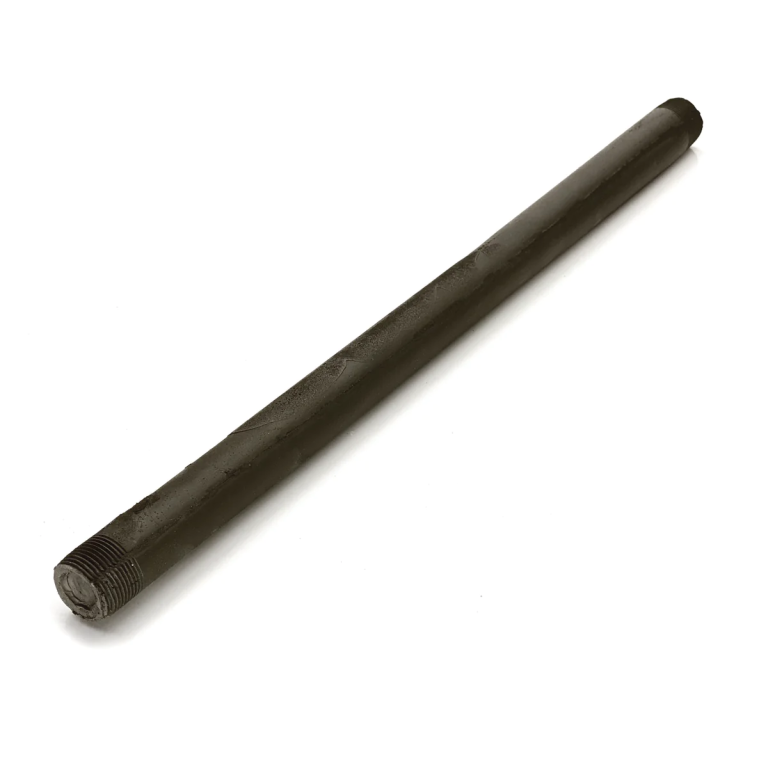
This is “Leady Larry”. I use him 2 or 3 times per week to correct artists who don’t respect the pipeline
In VFX, concepts and processes beat tips and technique every time.
After five years of visual effects, you will have learned many things. BUT if you haven’t developed a solid process and a solid pipeline, then you just won’t be able to operate as an effective artist.
Have a great weekend!