Understanding Visual Rhythm
To understand rhythm in imagery, whether it’s 2D or 3D, I find it helpful to just imagine that I’m a small person within that image or on the surface of that model and think about what my journey would be like traversing it.
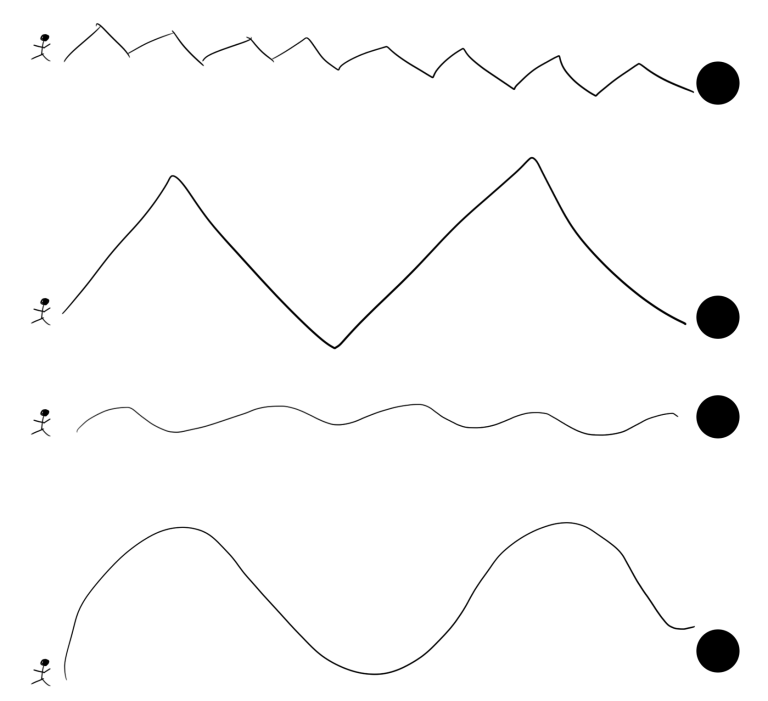
Take a look at the drawings above. The little figure is you (I think I captured you just right). Your journey is from left to right, but each time it’s a very different challenge, and feeling. Some will be more challenging, others more relaxing. Neither of those things makes the journey better or worse, but it makes the experience different.
Anyone viewing the image really takes the same journey as their eye travels across the image, and they will respond in the same way. So with this in mind, you can start to appreciate how rhythm will drastically affect the experience of the viewer. And that’s why just like a composer, you’ll want to have tight control of that rhythm, if you want to be a good visual storyteller.
The Broken Rhythm
Rhythm essentially comes from repeating a pattern.
It can be repeated quickly or slowly, aggressively or softly. But without repetition, there is no rhythm. However, without variety, the rhythm lacks tension and therefore interest. So when I’m focused on visual rhythm, I’m looking at repetition and variety AND looking at finding a pattern and finding where the pattern breaks - that is, in finding order, but ensuring there’s room for chaos. How you play with these two elements will determine the rhythm. And as always, there’s no right or wrong. This is a tool to help you tell stories visually.
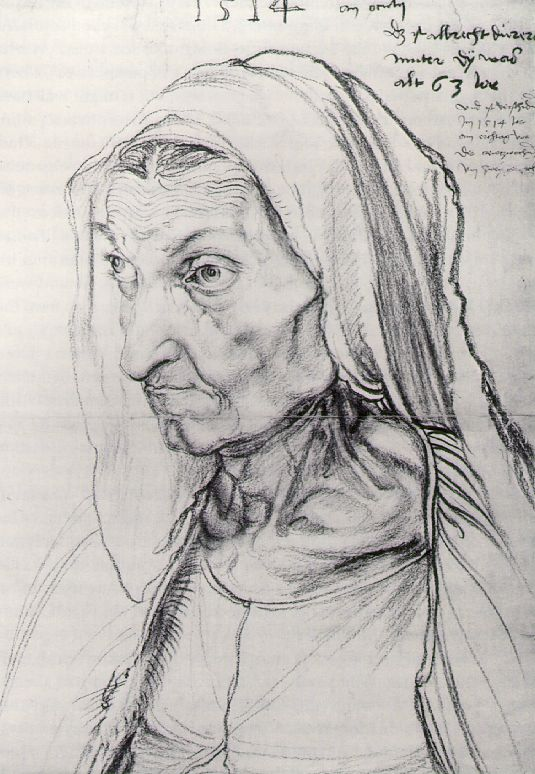
This drawing by Durer of his mother is full of rhythms, and they’re all broken. Take a look at the forehead wrinkles. What is the pattern, and where does he break it? How would the story be affected if he didn’t break it?
The Order and the Chaos
I think it’s really worth pointing out though that I’ve noticed that most artists, especially when they’re finding their feet will massively tend towards replicating patterns that tend towards order and be hesitant to break the patterns and allow the chaos in. I think this is probably related to our survival instincts where ordered manmade structures like a house means safety and chaos means danger.
In VFX, our tools (computer hardware and VFX software) naturally push us towards order, and therefore a synthetic image.
However, when you’re creating, you’ll often need to let the chaos shine through, and in VFX you’ll need to get creative with how you do that (maybe you’re copy/pasting a bunch of buildings to make a street, but you rotate one just a few degrees, like the foundations are subsiding? You still have the pattern, but you found a way to break it).
Interestingly, AI imagery tends towards chaos, and that’s part of what’s allowing people to develop an eye for what is human generated and what is AI. So if you’re working with that, you may need to bring some structure to it to get your rhythm in there!
Case Study
Let’s take a look at these two photos from Brazilian photographer Sebastiao Salgado

The contrast may be dramatic, but the rhythms are soft, allowing your eye to meander through the image. The straight horizon gently breaks the rhythm, and subdues the image, reducing the drama

Here the trees and clouds carry almost the exact same rhythmical patterns - abrupt, tight curves, moving upward. The sheer amount of them packed into the image creates a noise and intensity that results in great drama. This is “4am in a German techno club” type rhythm. The variety is there too, but I’ll leave it to you to find that!
Rhythm in Practice
Let’s look at a couple of early concepts for the Netflix film “Outside the Wire”. Our final concepts were very different from these, but I think that these two show extremes of rhythm quite nicely
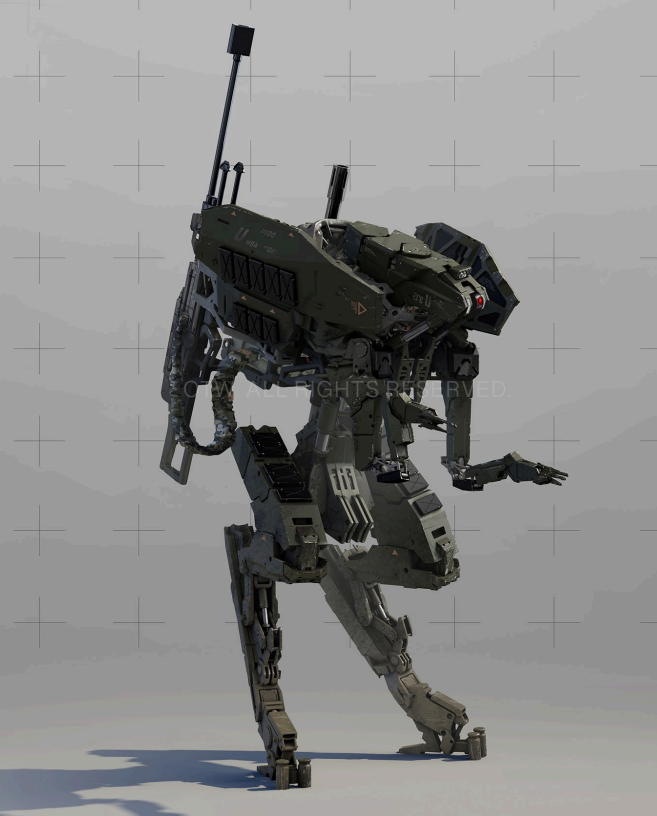
This “Insurgent Gump” was designed to be quick, aggressive, and agile. The predominance of small shapes
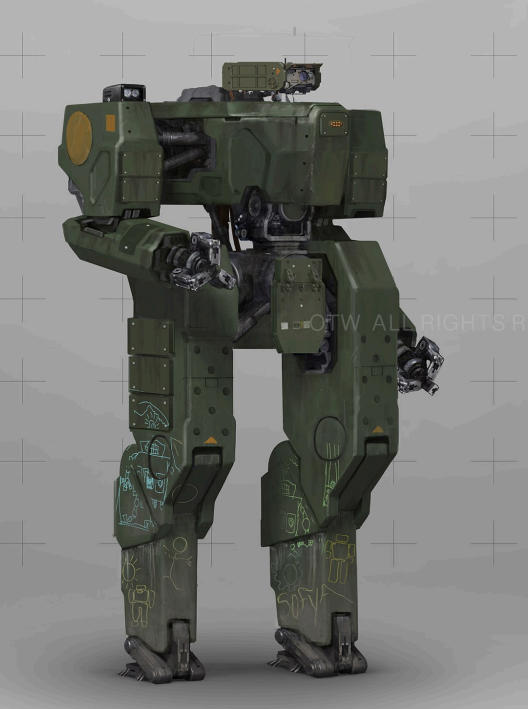
On the other hand, this “Russian Gump” was designed to be older technology, and lumbering. The rhythms are much broader, to reflect that. However, there’s enough variety in the shapes to keep a visual interest, and the pattern is broken around the joints and head, where there’s a sudden injection of small shapes.
That’s it for this week, I hope you all get your groove on over the weekend!