
2.5D, 3D, AI - WHAT TO USE AND WHEN
Along with animation, matte painting (the art of painting background and set extensions in film) has always been the most magical part of film FX for me. A drawing coming to life is unbeatable, but a painting that breaks through the barrier of reality and fools the audience into thinking it's a three dimensional photographed landscape? That's a pretty close second!
From Glass To Digital
The very first matte paintings were literally painted on a glass plane placed in front of the camera. Then they became full scale paintings in their own right, that would be filmed separately and added into the background. And then inevitably, they became digital additions in post production, and although to me they didn't lose any of their magic, they did change and get pulled along with the march of technology.
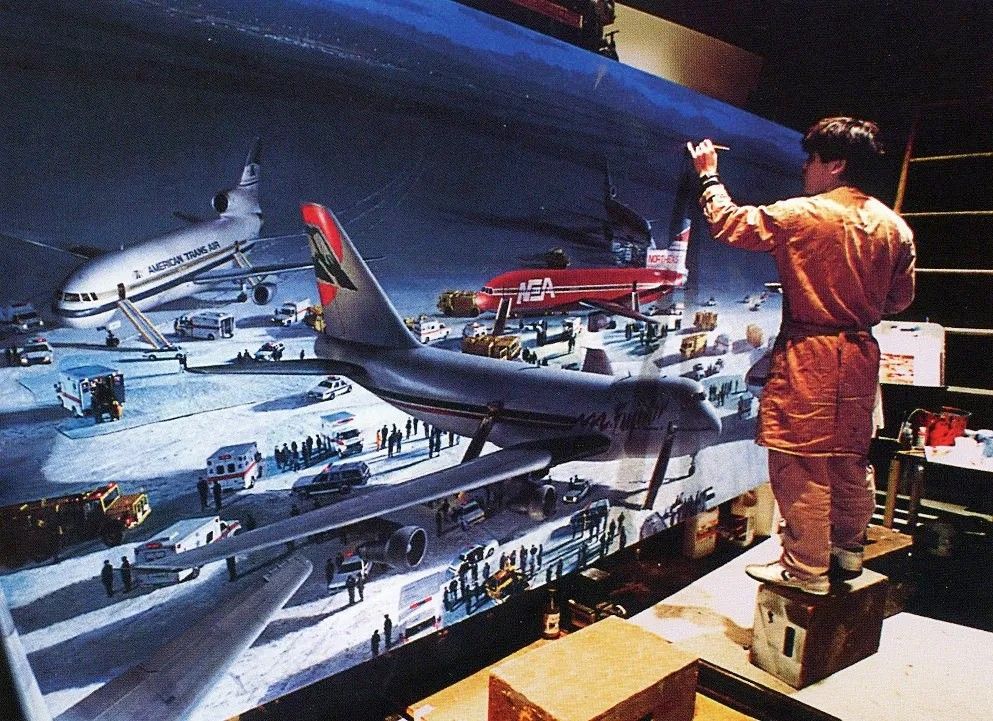
One of the last traditional matte paintings made in Hollywood - created for Die Hard 2 in 1990
Cards And Parallax
One step was having matte paintings as projections on cards. This is an old school animation trick - if you have a single painting, you have no parallax; the effect where objects closer to you move faster than those further away.
By having planes at different distances from the camera, the ones closest to you will move faster than those further away. It's not true 3D (if you rotate any of the planes or the camera, the trick breaks), but it's no longer 2D. We call that 2.5D.
2.5D can be a huge saver when it comes to computation time too. Rendering a whole forest could take hours per frame. If it's just a projection, you just render one frame and project that.
The Move To 3D
However, as computers have become more powerful, more and more of matte painting has been replaced by 3D. You still need an artist's eye for composition and lighting, but putting in 3D objects doesn't require anywhere near the skill and time that a matte painter would put in.
A combination of improved technology in Unreal/Unity realtime engines, and LED light volumes changed the game again, as instead of adding in digital environments in post, you can use them on set (at least for those who can afford it).
AI Enters The Frame
AI has of course changed the game again, as now anyone can change a background just by asking a computer nicely - but AS ALWAYS with AI, you'll get much further the more you understand the traditional way of doing it, both from a creative and a technical viewpoint.
We'll be doing a live workshop on this soon, but in the meantime, here's a digital matte painting (called DMP) cheat sheet. Get cheating!
Get the Matte Painting Cheat Sheet
What's Inside
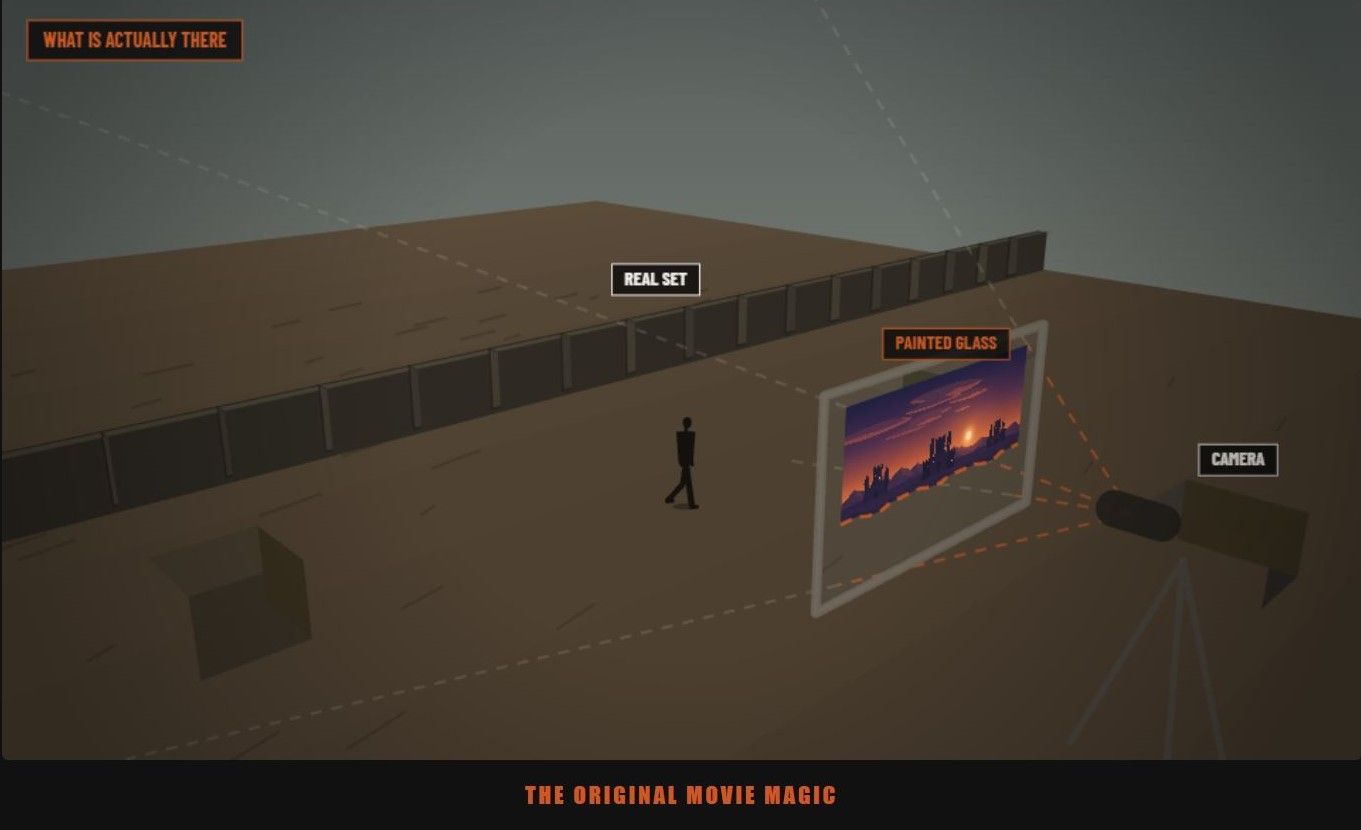
- •The glass era, painting straight onto a plane in front of the camera
- •2.5D parallax cards, faking depth with separated painted planes
- •3D camera projection, wrapping a painting onto real geometry so the camera can move
- •The hybrid pipeline, mixing painted, projected and full 3D elements in one shot
- •Where AI fits in, and why the traditional grounding still matters