I’m not afraid to admit it. Generally VFX isn’t scary.
It’s just not tangible enough even when it’s done really well. The audience will often recognize it as great CGI rather than mistaking it for reality. And if it’s not real, it’s not scary.
So if you want to use VFX for a horror movie, how do you get around that? Should you get around that?
Well, as is often the case in so many of the best examples of VFX, the trick is to go as far as you can on camera and then you augment that with VFX.
This could be quite extreme. Here’s a few examples -
Unwelcome, Sony Pictures
A couple of years ago, my company did the VFX for a comedy horror film called “Unwelcome” for Sony Pictures, where we relied heavily on camera trickery to create the murderous - but tiny - 3 ft high goblins of the film.
To avoid making CG Goblins, the sets were built to twice life size and regular-sized actors played the goblins, wearing latex masks. That worked great until the creatures needed to speak, or emote. That’s where the VFX came in.
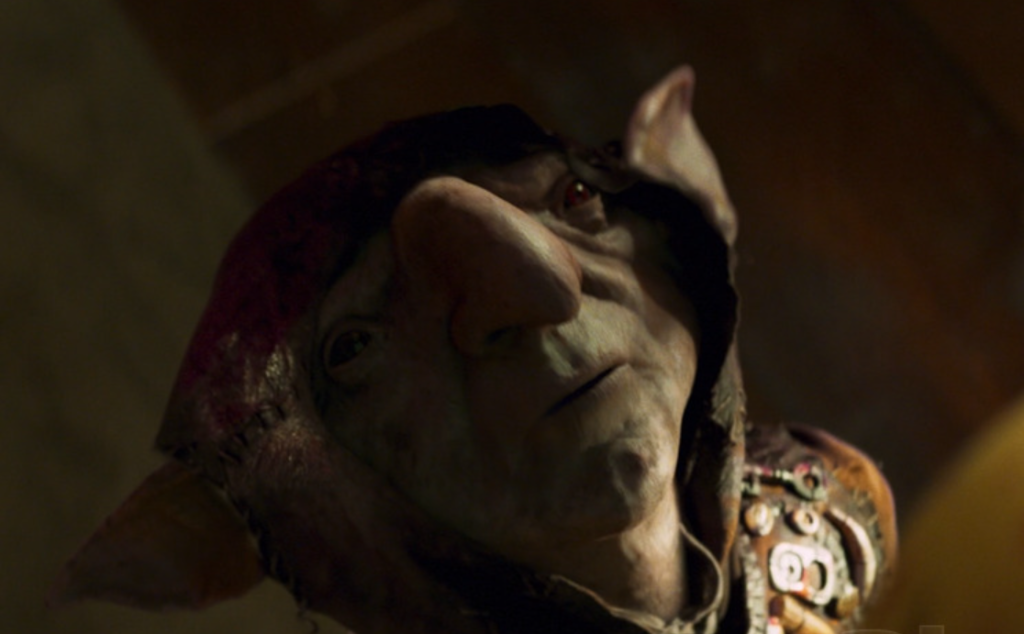
A whole bag of tricks were used to get Sony’s “Unwelcome” goblins onto the screen
The masks were digitally scanned and the scans were rigged so that they could be animated. When the goblins needed to move their faces, just the mobile portions of the faces were replaced. Remember - you go as far as you can in camera, and replace that with VFX. In this way, we kept all the imperfections of real life and just use visual effects to break beyond the practical boundaries of latex.
Half Bad, Netflix
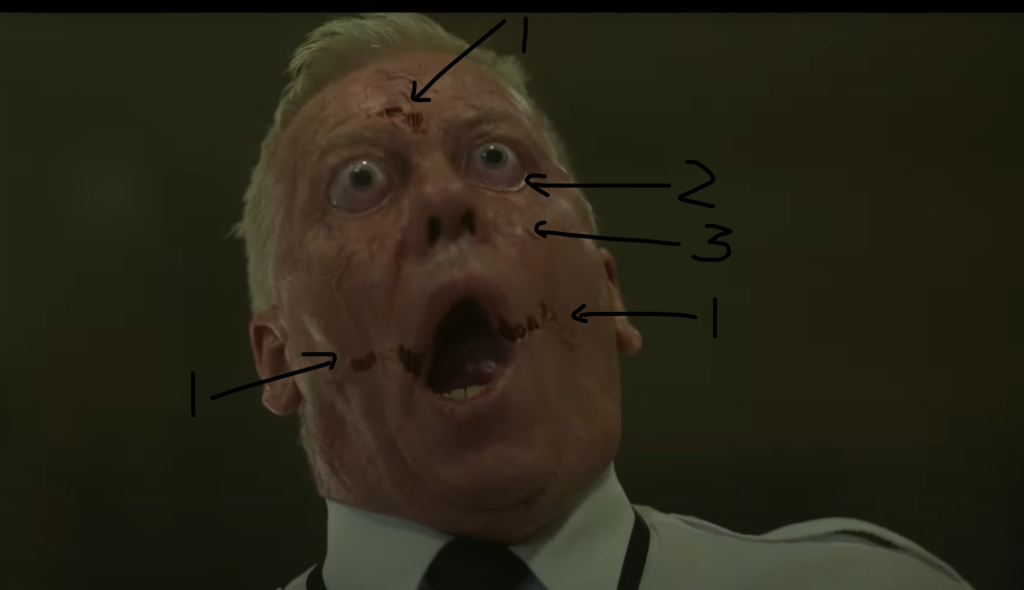
This shot relies heavily on the actor. A digital scan of his head was created, but was only used to replace 1. The torn areas, 2. The stretched parts of the eyes, and 3 the veins on the skin
For this face-ripping shot in a series we did for Netflix called “Half Bad”, the majority of the shot is the original actor. We just replaced the smallest possible amount that we could around where we needed a ripping effect. Even his eyeballs are only partial replacements, even though they pop out of his head. We use the actor’s original irises and pupils, and moved them about, and added digital reflections on top.
Invisible FX
One of the main giveaways of a shot being VFX is when the audience knows it’s impossible to do it any other way. In those cases we just make the VFX as good as we can, knowing that we’re not fooling anyone. But we do fool people, more than they realize. Often, we don’t need to use VFX at all, but we do anyway.
This is called
Invisible VFX because 90% of the time, even the most red-faced CG critics will not know that it’s there. It’s generally done to gain more control in the editing process. David Fincher is a master of this, and there’s a great YouTube video breaking down his technique
here.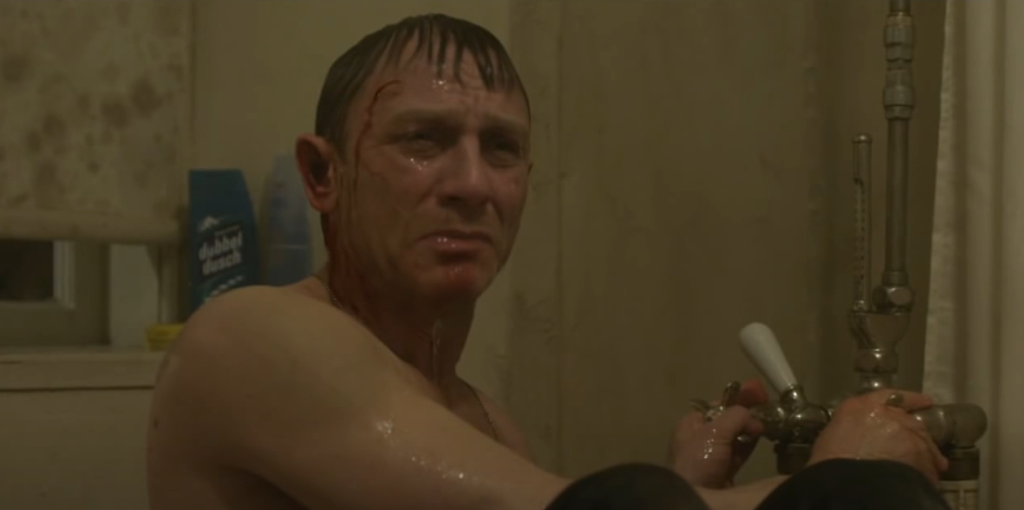
This blood is 100% digital. WHY? Think about it (clue - he’s under running water…)
Since we’re talking horror this week, I’d like to draw your attention to an example from that video, which is Finch’s commitment to using only digital blood in the “Girl with the Dragon Tattoo.” That might seem insane… until you try to shoot a film with a lot of blood and you have an actor wipe their brow in between takes. Suddenly they’ve smeared the blood drips across their forehead, and have broken continuity between all the shots you’ve just filmed and any shots you have left to film. Digital blood perfectly side steps that problem.
So does VFX have a place in horror? Of course it does. I believe it has a place in all areas of film. It just needs to be used carefully and planned out in advance…WHICH IS WHAT I SAY ABOUT ALL AREAS OF VFX ALL THE TIME.
But… most of the time Hollywood never listens to me, and VFX continues to be overused and over-expensive. Hopefully, you’ll listen though.
Shoot First Fridays will resume normal service this Friday. Until then, happy Halloween!