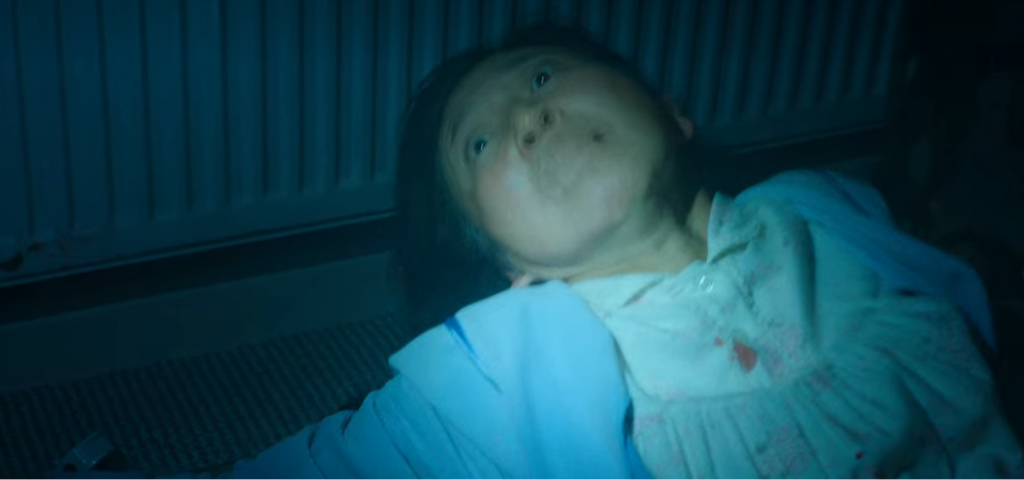
This shot of a woman’s face sealing shut would have looked terrible if lit by an HDRI. Find out why below!
Last week, we spoke about the wonders of high dynamic range images in “stealing” the lighting from set, to carry through to our digital world and to light our digital objects realistically.
This week, I want to talk about why that might actually be a really bad idea.
A major part of being a good VFX artist is having a solid understanding of how things work in real life; cameras, lenses, explosives, costumes, whatever it may be. You’re going to have to get your head around it, at least to some extent, if you want to have a chance of convincingly digitally recreating it to take this to a logical conclusion.
As a visual effects artist, you’re going to need some understanding of pretty much all visual areas of actual film making. That’s one of the scariest but most rewarding things about VFX!
And understanding film lighting is no exception. The more that you understand about film photography, the better you’ll be at doing it digitally.
Sneaky Tip
You can learn all about lighting by studying shots from films
If you freeze a frame and look into the eyes of a character, you’ll often get a perfect reflection of the lighting set up and be able to see the tricks that the photographer is doing. Bald heads are good for this, too! Many self taught photographers have learned this way.
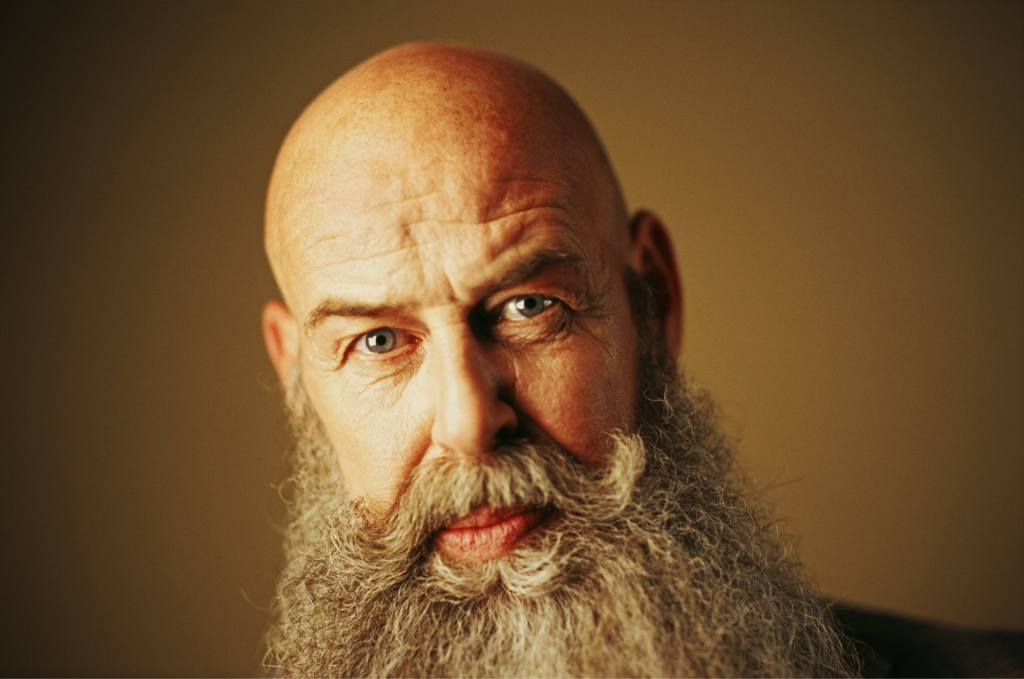
The eyes don’t lie. Zoom in…can you see it? Two large square lights on screen left, coming in from a 45 degree angle. One small light coming in from screen right, at a nearly 90 degree angle
An HDRI is an even better reference point - it’s giving you a 360 degree view of how the lighting was set up!
Surely that’s the best reference that you could ask for? Yes, it’s great. I already told you that HDRI’s were great, that was the whole point of last week’s newsletter!
The problem is how we use them (professionals included!)
They are SO good reference, that they have an aura of magic about them. For many artists, digital lighting is “put in an HDRI, render, call shot lighting complete, move on”.
That’s a problem.
No, actually it’s two problems:
- What the hell are you going to learn about film lighting by doing that? You’ll stay at the same level for your whole career.
- Your work is generally not going to look anywhere near as good as doing it by studying the lighting and matching it by eye
Point one is important, but doesn’t need expanding on. So let me elaborate on point 2 - why HDRIs can ruin your lighting game.
Put simply, in VFX we’re trying to recreate the real world, to an extent. And HDRIs DON’T BEHAVE LIKE REAL WORLD LIGHT.
Science time!
In the real world light decays according to an inverse square ratio, which means more to clever people than it does to me. I just know it means that as the distance of light travelled doubles the strength drops by 75%. Oor to put it more simply - light dies quickly.
Try this - stick a light on at the end of a room. Look at the light source. Look at the other end of the room. Unless you have an insanely powerful light, the brightness at the other end will be significantly dimmer than at the source.
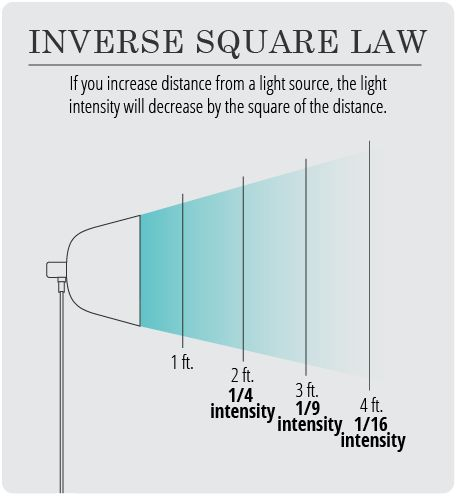
4 feet…1/16th intensity! Light. Dies. Quickly. This is why professional film lights are so huge!
The only exception to this is sunlight, since it’s too powerful for any decay to be noticeable (which is what makes faking sunlight on set a nightmare!)
HDRI light is like sunlight; it doesn’t decay. Digital objects can’t get closer to it, or further away.
That’s fine for recreating sunlight. But a really bad idea for recreating man-made light, which decays really quickly.
A good lighting game is SO important in film and VFX.. So as you’re going to do it, do it properly. With that in mind, here’s a few dos and don’ts regarding HDRI use:
DO:
- Learn how to make them, and take one for each lighting set up on set.
- Use them for reference of how the set lighting looked.
- Use them for outdoor shots, since their behaviour is the same as skylight.
- Use them for very soft (high fill) light setups. If the light is soft, it generally means that the source is already far away, and so the fall-off won’t matter so much.
- Use them for shiny reflections (like a new car).
- Consider mixing and matching using an HDRI as a base and augmenting that with digitally recreated on-set lighting.
- Get so good at lighting by eye that you don’t care if you have an HDRI or not.
DON’T:
- Be a lazy lighter. Don’t ever think that your lighting is done just because you’ve put in an HDRI.
- Use them if your light source is supposed to be moving (in the image at the top, the lighting was a handheld torch, and we didn’t use HDRI to light it). HDRIs don’t move.
- Use them if your light source is close to your CG, especially if your CG is moving. That’s because your CG can’t get brighter or darker as it moves towards or away from the HDRI.
- Say “I read all of that and I still don’t quite understand it. VFX is too hard. I’m going to eat a biscuit”.
Thanks for taking the time to read it - and if you’re stuck on something, drop me a line!