In our journey to mastering VFX, we often encounter various challenges and seek out the best resources to aid our learning process. The current go-to is YouTube, but navigating the sea of tutorials and content can be overwhelming, leading to frustration and confusion for many students.
Pros and Cons of YouTube for Learning VFX:
Many Shoot First students start out trying to learn VFX from YouTube, only to become disheartened and abandon their efforts until they find us. However, I firmly believe that YouTube is an incredibly valuable resource for learning visual effects, one that I personally utilize extensively. In this newsletter, I aim to delve not only into the pros and cons of utilizing YouTube for VFX education but also how to harness its potential as a powerful tool in your learning arsenal.
Understanding the Distinction: Software vs. VFX:
So the problem most people are facing without realizing is that they’re grouping together learning VFX software (such as Blender, Maya, Fusion, Nuke, and After Effects) and learning VFX.
It’s essential to recognize that these are two distinct skills, each requiring its own unique approach to mastery.
If you only understand the software, then you can’t do VFX. The majority of YouTube channels are focused on this, and that’s not a bad thing. You just need to be clear that that’s what you’re learning! Most people creating YouTube tutorials aren’t professionals, but have as good an understanding of the software as many professionals do.
On the other hand, if you only understand VFX, and not the software, then you can’t actually create anything! This is nowhere near as uncommon as it might seem. Many VFX supervisors lose touch with software, since they’re spending time supervising rather than getting their hands dirty with the work. I include myself in this, and need to spend time keeping up to date with the software, so that I can teach it. And my resource to do that? YouTube, obviously!
That’s what it’s great for.
Maximizing YouTube for Software Mastery:

Here’s what I’d suggest. To learn VFX, you’ll need to understand 3D and 2D software (although the line between them gets more blurred every day). To learn 3D, start with Blender, spend a couple of weeks with
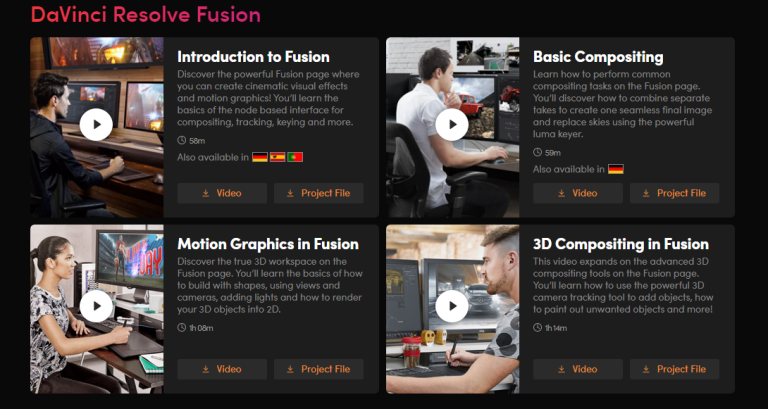
The Blender Guru’s famous Doughnut Tutorials. Both the software and the videos are free. To learn 2D, you can get Da Vinci resolve - professional grade editing software, which is also free, and
work through their tutorials.
The learning curve will be steep. It’s steep for everyone, but trust me, it gets easier. Once you understand one 3D package, and one 2D package, most software can be learned very quickly.
If you find yourself disheartened, maybe focus on tutorials that you can follow along step by step, that hold your hand to creating something cool. That way, when you finish the tutorial, you have something visual that you can be proud of.
These tutorials are great for moral, but have limited learning use, because ultimately what you’re doing is basically a long way of copy pasting from the tutorial to your computer! Don’t let it trick you into thinking you’re learning VFX, that’s something else.
Learning VFX:
To learn VFX, you’re going to need to learn technical and creative problem solving. These are skills best learned by doing VFX shots!
So here’s what I’d recommend - think of a shot that you want to do. It should be fun, to motivate you, but try and set your bar incredibly low. Like, loooow. Whatever is the minimum that you think you can achieve in the time that you have, find something significantly lower than that. Bid out how long you think it will take, because learning how to bid shots is a great skill to have (you’ll almost certainly be too optimistic!)
Here’s the magic of doing shots - it will immediately become incredibly obvious what you actually know as opposed to what you think you know.
That data is gold! You will get data about what works and what doesn’t. You will realise the limitations not only of your VFX, but of VFX in general. You’ll learn from that how to PLAN shots.
You’ll find it’s much harder to get help for VFX problems (“How do I make my actors eyeballs melt convincingly”) than it is for software problems (“How do you make something melt in Blender?”), because many more people know the software than know VFX.
That can be frustrating, but I would argue ALL of filmmaking is problem solving, ALL the time, and VFX is no exception. We’re all in the same boat. Make peace with that, and you’re halfway there.
(The other half is time and pain, but I’m putting this in brackets so that I don’t end the newsletter on a down beat)
Have a great weekend!