
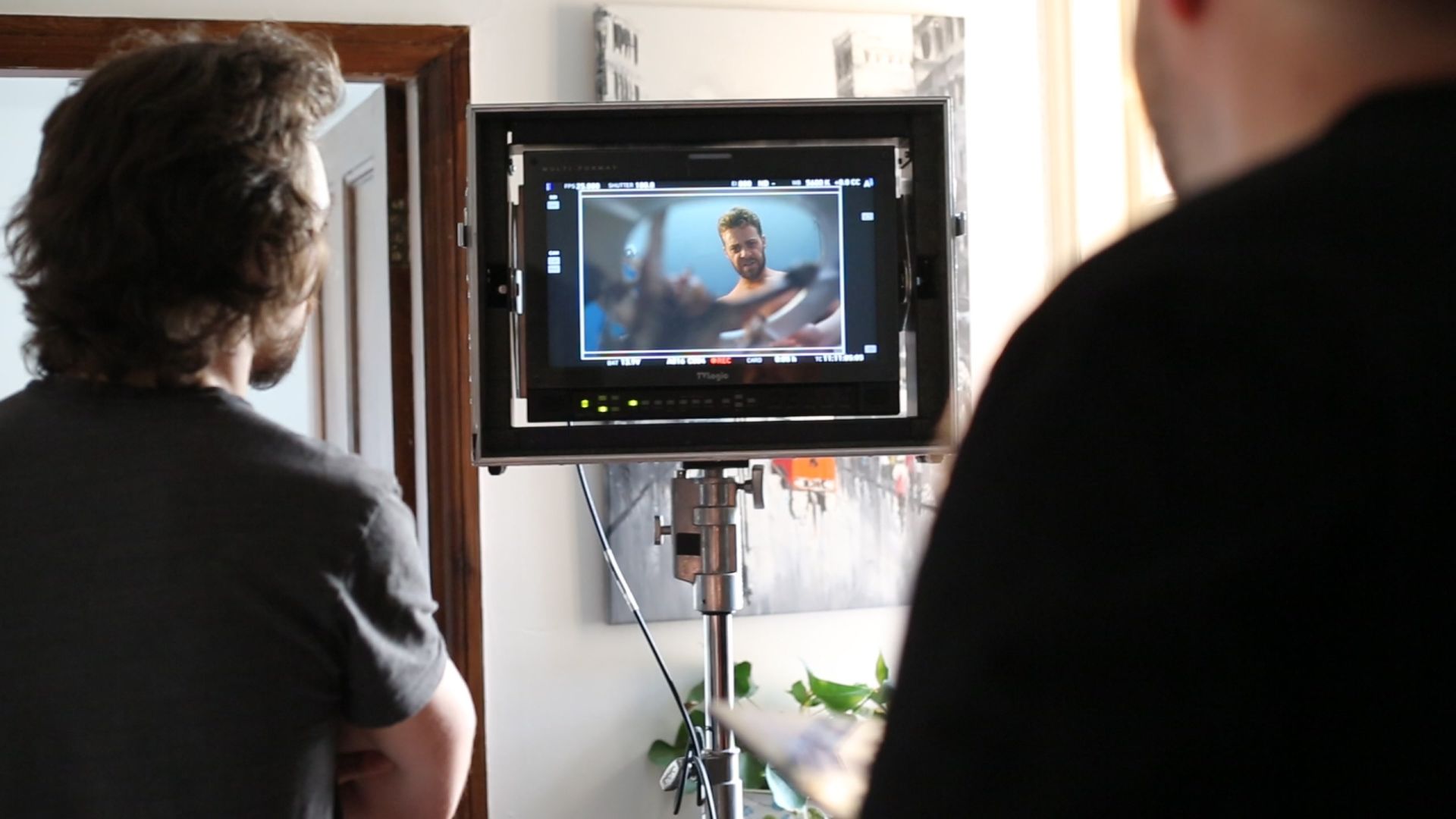
On the set of Constant Parasite
I think there's a compelling case for AI being one of the best entry points into filmmaking. You can create exciting shots very easily, and if you're excited about your work, you'll put more hours in, if you put more hours in, you'll get better. I love recording feedback on films you guys make that I know couldn't be made without AI, from people who may have never started making films if the technology didn't exist.
BUT I think there's an equally compelling case for it being a terrible entry point into filmmaking. And both of these things can be true, just for different people.
Here I want to lay out the case for not using AI as your entry point. It's not a suggestion, everyone has their own path. But it's a set of opinions, based on my own experience, and what I see in others.
DO THE RIGHT THING
Every skill has a certain set of foundational practices necessary to build it. Realist painters start by learning to draw, then moving to painting. They study light, anatomy, drapery, composition, colour, all as separate subjects, but all are united in their underpinning of the primary goal - painting. Athletes have movement drills, technical practice, stretching, strength training, sports psychologists.
Whatever the field is, progress can be guaranteed if you follow a proven path of doing the right thing. In the sport that I teach, BJJ, one of the main mistakes people make is just not doing the right thing. Like film, BJJ evolves quickly - each week there's a new and flashy technique doing the rounds on social media, and a beginner will want to do that. But it's not the right thing. They should be drilling, sparring, and taking notes. Nothing else is necessary.
Learning AI is not the “right thing” for filmmaking. Learning story telling is. Putting edits together is. Learning teamwork is. Technical problem solving is. VFX. Music. There's lots of roads to explore, but they all lead to the same place.
AI by itself is a road that doesn't lead there. In fact it may lead you far away…
THE DELUSION
Have you ever had AI appraise a script you've written? I have. It told me I was a genius. I politely asked it to shut up, and come back at me from a much more critical angle. No dice, I was still a genius.
I told it to assume the role of an impossible to please film producer and to rip my scripts to shreds. It tried, it said - and I quote - “Now, listen here sonny. I don't give compliments away easily, and I'll only say this once. But this script is a work of genius”
What the AI didn't know is that I've worked with hundreds of impossible to please film producers - they're impossible to please. You get ripped to absolute shreds. If I hadn't had that experience, maybe I would've taken the AI at its word, and not looked to improve my writing ability.
At its extremes, AI driven delusion is extreme, leading people to cause real and irreversible harm to others - but I think when it comes to criticism, each and every one of us is susceptible to its charms, if we engage, and that will lead us by steps, or by leaps, away from the direction that will lead to improvement and success.
In a similar vein, having Seedance create an amazing shot does not make you an amazing artist. Doesn't matter the prompt you used, or the clever trick that you used to get it to generate just right. But you definitely feel pretty good about it when it happens right? Don't believe the deception.
Nearly every single meaningful decision was made by the machine. And it makes a lot of them, far more than are necessary, which takes us to our final problem:
ABUNDANCE
Good design and good storytelling is reductive. Remove remove remove. No fat, just rippling muscle and tight sinew strung across a structurally sound skeleton.
Humans can reach that point too, but we're not born that way. We're born fat, uncoordinated and clumsy. But through work and experience we can learn to be deadly.
AI doesn't have that growth. It's born fully formed, and it's too much. It's difficult to reduce, and it's difficult to handle. It's why I hate it for storyboards. Humans need time to grow, to learn, to get perspective. So does a film. You should learn to nurture it from its weak and helpless state into the thing that it was destined to be. As with children, you'll find it has its own life, different from what you expected, different from anything you could've dreamed of - but it can only reach that point if you're there to guide and support it the whole way.